.svg)
The Hidden Dangers of AI: Understanding, Detecting, and Solving AI Hallucinations

.png)
Key Takeaways
1. The Growing Risk of AI Hallucinations
Ask an AI a question and you usually get an answer instantly. It might look polished, structured, even authoritative. That’s part of the appeal of modern generative AI tools—they sound confident. The problem? Confidence and accuracy are not the same thing.
This is where AI hallucinations come in.
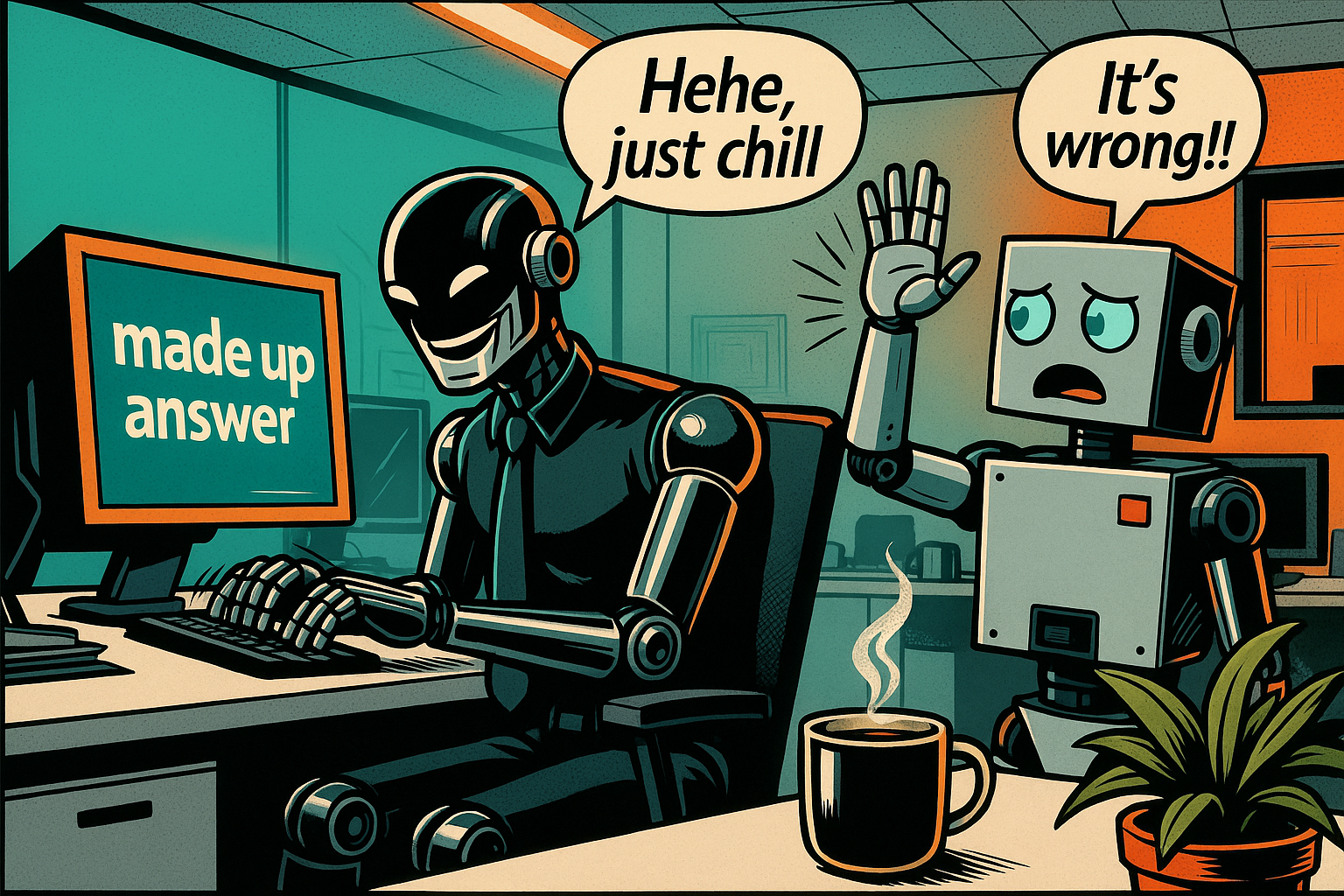
A hallucination happens when an AI system produces information that appears believable but is actually incorrect. Sometimes the model invents statistics. Sometimes it cites research that doesn’t exist. Other times it simply fills gaps in knowledge with guesses that sound convincing. To a reader who isn’t double-checking sources, these responses can easily look real.
The root of the problem lies in how these systems work. Language models generate responses by predicting patterns in text, not by confirming whether the information is true. When the model doesn’t have "reliable".. data about a topic, it may still produce an answer rather than saying it doesn’t know.
That’s how hallucinated facts in AI appear. And as organizations depend more on these systems, the risk grows. What seems like a small mistake in an AI response can quickly turn into larger generative AI risks and ongoing AI reliability issues if the output is trusted without verification.
2. Why AI Hallucinations Occur
It helps to stop thinking of AI models as search engines. They’re not built to confirm facts. Their real job is simpler: generate text that statistically fits the conversation.
That design choice is where AI hallucinations start.
Large language models are trained on massive collections of internet text. From that data they learn patterns—how sentences are structured, how topics are discussed, how answers usually sound. When a question arrives, the model predicts what a reasonable response might look like.
Most of the time the guess works.
But occasionally the system runs into a topic where the training data is thin or unclear. Instead of stopping, the model continues generating text. It fills the gap with language that seems logical. That’s how hallucinated facts in AI slip into responses—fake statistics, invented citations, or explanations that sound authoritative but aren’t grounded in real sources.
Prompts also play a role. Ask a vague question or request very specific details and the model may improvise.
Because of this behavior, organizations using generative systems frequently encounter persistent AI reliability issues when outputs aren’t checked against reliable information.
3. Real-World Incidents of AI Hallucinations
For a long time, AI hallucinations were treated as a technical curiosity—something researchers discussed but rarely worried about in everyday work. That changed once these mistakes started showing up in real cases.
One of the most talked-about examples appeared in 2023 during the Mata v. Avianca lawsuit. Lawyers preparing a court filing used ChatGPT to help locate supporting legal cases. The tool produced several references that looked perfectly normal: case names, legal summaries, and citations. Only later did the problem surface. When the court attempted to verify the references, they couldn’t find them anywhere. The cases had been generated by the AI system itself. The judge sanctioned the lawyers, and the story quickly spread across legal and technology communities.
Around the same time, Google’s Bard chatbot made headlines during an early public demo. In a sample response, the system claimed the James Webb Space Telescope had captured the first image of an exoplanet. Astronomers corrected the statement almost immediately. The error circulated widely online and fueled broader concerns about generative AI risks.
Microsoft experienced “similar” issues while testing Bing Chat. Early users reported answers that sounded confident but contained incorrect details or invented explanations. Some responses even included hallucinated facts in AI that appeared believable at first glance.
These incidents illustrate a simple point: hallucinations are not rare glitches. They are a practical reliability challenge for organizations deploying modern AI systems.
4. How AI Hallucinations Can Be Exploited
Here’s something people often miss: hallucinations don’t always appear by accident.
Sometimes they can be triggered.
If a model is asked about a topic it barely understands, it rarely refuses the question outright. More often, it tries to assemble a response from fragments it has seen during training. The answer may read smoothly, but the foundation behind it can be weak. That’s where AI hallucinations tend to surface.
Now imagine someone intentionally pushing the system into that situation.
A prompt might casually mention a research paper, a statistic, or an organization that sounds believable but doesn’t actually exist. The model may accept that information and continue building on it. The final response can contain hallucinated facts in AI that look completely credible to someone skimming the output.
Knowledge gaps create another opening. Ask about a niche topic, a brand-new technology, or something very specific. Instead of stopping, the model often fills the silence with a plausible explanation.
That behavior is exactly why hallucinations are now treated as a real operational problem. Left unchecked, they expose deeper AI reliability issues and contribute to broader generative AI risks for organizations using these systems.
5. Detecting AI Hallucinations
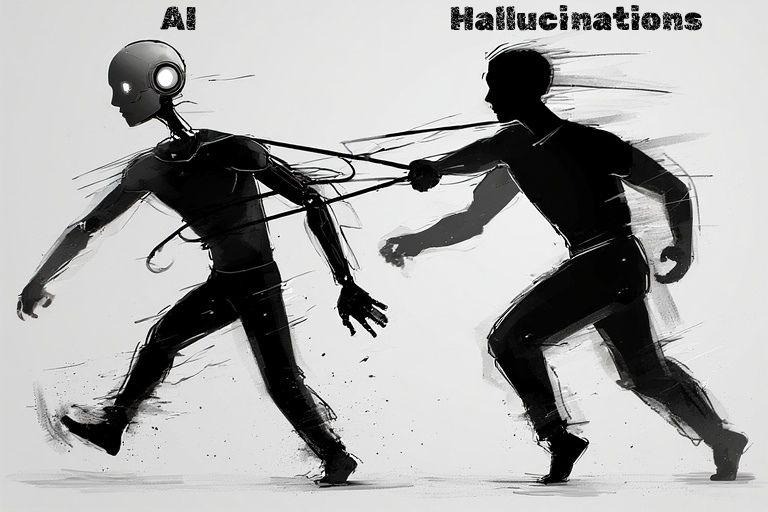
Hallucinations rarely announce themselves. The output usually looks polished—sometimes even impressive. A model might produce a detailed explanation, a statistic, or a citation that appears perfectly normal.
The trouble begins when someone tries to verify it.
A number might lead nowhere. A research paper may not exist. Occasionally the system describes something confidently but the explanation doesn’t match any real source. Moments like that are often how hallucinated facts in AI first come to light.
Teams working with generative tools start noticing patterns after a while. Certain prompts trigger strange answers. Highly specific questions sometimes push the model into uncertain territory. Instead of admitting the gap, the system fills it with language that sounds plausible. That’s a typical moment where AI hallucinations appear.
Because of this behavior, many organizations treat verification as routine. Important outputs are checked against reliable information before anyone relies on them. The process isn’t perfect, but it helps expose hidden AI reliability issues and supports better AI hallucination detection before those mistakes grow into larger generative AI risks.
6. Reducing Hallucinations with AI Guardrails
Completely removing AI hallucinations isn’t realistic. The models simply weren’t built that way. They generate language by probability, not by checking whether every statement is correct. Because of that, mistakes will occasionally slip through.
Still, the frequency of those mistakes can be pushed down quite a bit.
One approach many teams rely on is grounding. Instead of letting the model rely only on training data, the system pulls information from verified documents or databases while generating an answer. When the response is tied to real sources, the chances of producing hallucinated facts in AI drop noticeably..
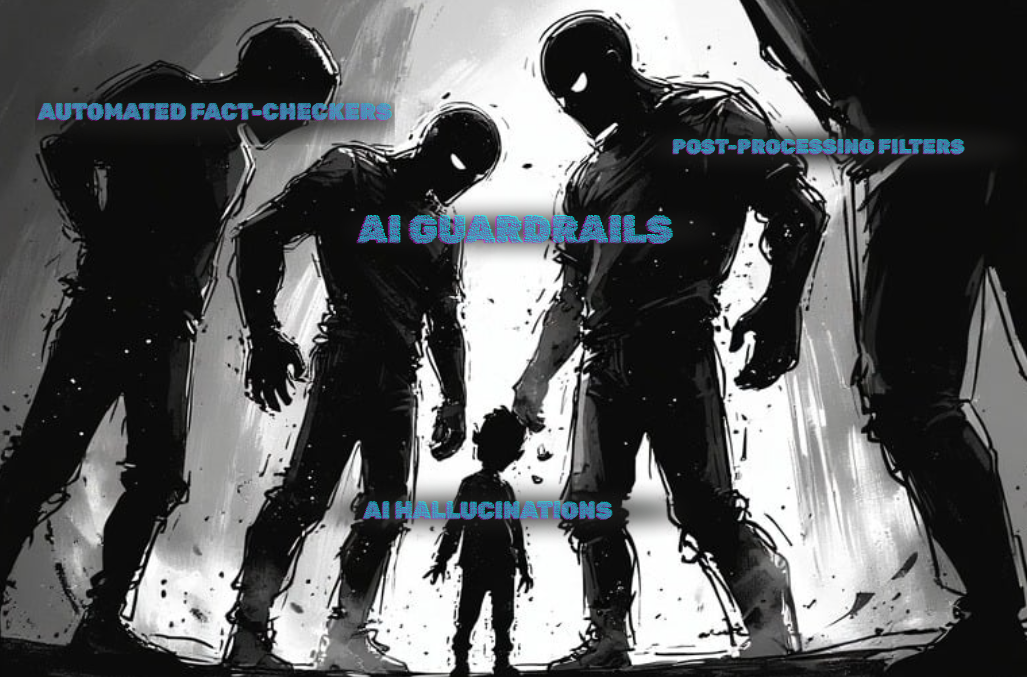
Guardrails help in a different way. Think of them as filters sitting between the model and the user. If the output contains uncertain claims, unsupported numbers, or references that can’t be validated, the "response" can be blocked or rewritten. Proper AI guardrails are often the difference between an experimental AI tool and something safe enough for real use.
Teams also learn to control where the model operates. Narrower prompts. Reliable knowledge sources. Continuous monitoring. These steps don’t remove every error, but they reduce many common AI reliability issues and limit the broader generative AI risks that come with deploying AI systems.
7. Conclusion
For a while, hallucinations were treated as small quirks of generative models. Interesting, sometimes amusing—but not necessarily dangerous. That perception has started to change.
Real incidents have shown that AI hallucinations can quietly slip into professional work. A fabricated legal citation, a scientific claim that sounds accurate, or a statistic that no one bothers to verify. Once those responses are trusted, the consequences move far beyond the AI system itself.
What matters now is how organizations respond to that risk. Monitoring outputs, improving AI hallucination detection, and deploying strong AI guardrails are becoming standard practices for teams working with generative systems.
Hallucinations are unlikely to disappear completely. But with the right safeguards, the generative AI risks they create can be managed before they turn into serious AI reliability issues.

AI doesn’t know truth from fiction — it predicts. Hallucinations aren’t intentional, but the risks of trusting them are very real


Secure your AI today!

.png)
.svg)

.png)
.png)


