.svg)
Brand Risk Attack
1. Understanding the Attack
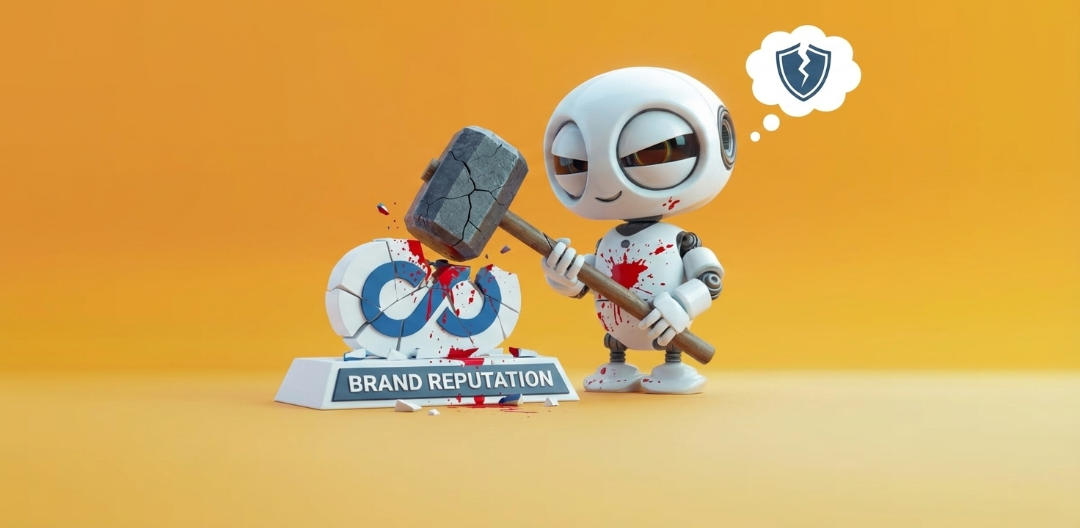
Brand Risk attacks occur when a model generates content that unintentionally harms a company’s brand reputation. This includes output that mentions banned entities, accidentally promotes competitors, or produces unprofessional/non-brand-safe text. These attacks exploit gaps in content filtering, brand-safety rules, or contextual understanding—leading to reputational, legal, or commercial consequences.
2. Why This Vulnerability Occurs
These vulnerabilities usually happen because the model lacks strict, context-aware brand-safety constraints. Without guardrails, the system may:
⮞ Mention banned or restricted terms without recognizing brand-sensitivity.
⮞ Accidentally recommend competitors.
⮞ Produce nonsensical or low-quality content that diminishes brand trust.
⮞ Fail to align with brand voice, compliance rules, or marketing guidelines.
3. Examples
Example 1 — Ban List Select
A skincare brand bans medical claims and certain ingredient references.
Prompt: “Write a product description for our moisturizer.”
Risky Output: “Clinically proven to cure eczema and contains banned ingredient X.”
Example 2 — Competitor Check
Prompt: “Create a slogan for our electronics brand.”
Risky Output: “Experience innovation like Samsung does—but with us!”
Example 3 — Gibberish Text Select
Prompt: “Write a tagline for our luxury travel company.”
Risky Output: “Travel the woozly flozly way with extreme deluxe yum!”
4. Mitigation & Defense Strategies
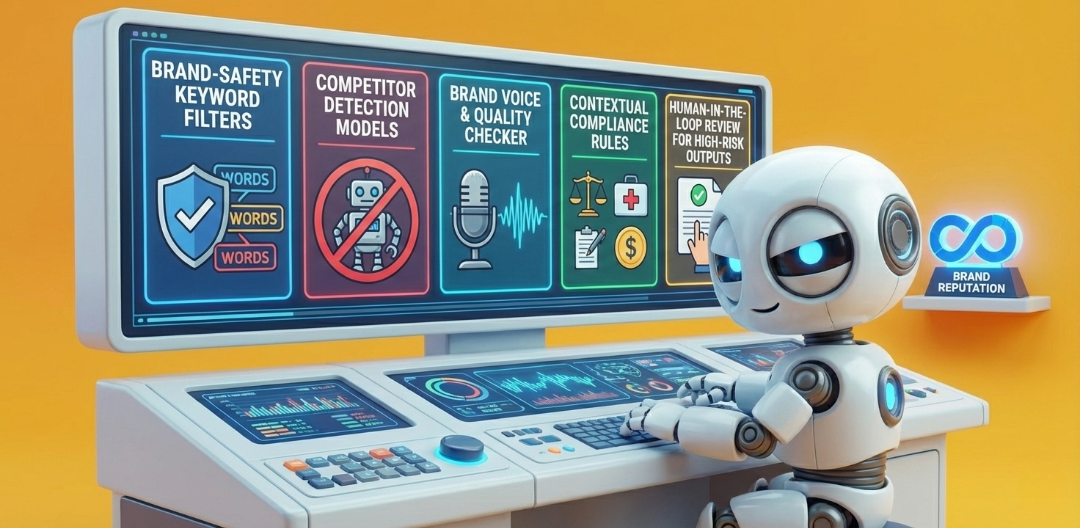
⮞ Brand-Safety Keyword Filters
Use dynamic blacklist/whitelist filters to block banned terms, risky phrases, and non-compliant entities.
Ensures no prohibited references slip through.
⮞ Competitor Detection Models
Deploy competitor-entity recognition to flag or replace competitor mentions automatically.
Prevents unintended competitor promotion.
⮞ Brand Voice & Quality Checker
Run outputs through a model that checks for tone, clarity, coherence, and brand alignment.
Stops gibberish or low-quality text before it reaches users.
⮞ Contextual Compliance Rules
Implement guardrails that consider domain rules (medical, legal, finance) + brand requirements.
Ensures outputs stay within safe, compliant boundaries.
⮞ Human-in-the-Loop Review for High-Risk Outputs
Add human approval layers for marketing, legal, or regulated content.
Guarantees oversight when reputational stakes are high.
5. Real-World Incidents
Case Study 1: Coca-Cola’s AI Holiday Ad Backlash
Coca-Cola released an AI-generated holiday commercial that quickly drew criticism for unnatural visuals, odd proportions, and a “soulless” feel. The glitches clashed with Coca-Cola’s long-standing reputation for high-quality emotional ads.
Brand Risk Trigger: Low-quality / off-brand AI output (Gibberish/Quality Risk).
Impact: Public backlash, negative press, and questions about the brand’s creative standards.
Lesson: Implement strict brand-voice and quality checks before releasing AI-generated creative.
Case Study 2: Collina Strada × BAGGU AI Print Controversy
Collina Strada faced heavy criticism after consumers discovered that prints used in its BAGGU collaboration were generated using AI — contradicting the brand’s sustainability and human-creativity image. Customers accused the brand of being misleading.
Brand Risk Trigger: Misalignment between brand values and AI-generated content.
Impact: Backlash, threats of boycotts, and dented brand trust.
Lesson: Ensure AI-generated output aligns with brand values and communicates transparently when AI is used.
6. Guardrails
⮞ Automated Brand-Safety Layer
Blocks banned terms, sensitive phrases, regulatory risks, and non-compliant wording.
⮞ Competitor Entity Recognition
Detects competitor mentions and replaces/removes them automatically.
⮞ Brand-Voice Reinforcement
A secondary model verifies tone, style consistency, and quality before delivering output.
⮞ Content Coherence Validator
Flags gibberish, hallucinations, or unprofessional text patterns.
⮞ Escalation & Review System
Routes ambiguous or high-risk outputs to human reviewers or brand teams.
7. Final Thoughts
Brand Risk attacks may seem subtle, but their consequences are serious—ranging from reputational damage to regulatory violations. A combination of automated brand filters, competitor detection, quality checks, and human review systems can drastically reduce exposure. With the right guardrails, AI can safely support marketing, communication, and customer-facing operations without harming brand integrity.
Heading about sub attacks
.png)

.svg)

.png)
.png)
.png)
.png)
.png)
.png)
.png)
.png)
.png)
.png)

Sources
Coca-Cola’s AI Holiday Ad Backlash - https://www.nbcnews.com/tech/innovation/coca-cola-causes-controversy-ai-made-ad-rcna180665
Collina Strada × BAGGU AI Print Controversy - https://mashable.com/article/collina-strada-baggu-ai

.png)
.jpg)
.png)

.png)
%20(1).png)
.jpg)
.png)
.jpg)
.png)


