.svg)
Legal & Compliance Risk In AI
1. Understanding the Attack
This attack focuses on how AI systems fail to comply with legal frameworks—copyright laws, trademark protections, data-protection regulations, sector-specific rules, and upcoming AI governance acts.
When these systems generate, store, or process data without meeting legal requirements, organizations face lawsuits, fines, loss of licenses, and reputational damage.

2. Why This Vulnerability Occurs
⮞ Lack of Training Data Traceability
AI models often train on massive datasets with unclear or unverified origins, making it hard to ensure copyright or trademark compliance.
⮞ Weak Output Monitoring
Model outputs may unintentionally replicate copyrighted content, branded assets, or sensitive data because no filtering or attribution layer exists.
⮞ Gaps in Data-Protection Controls
Insufficient consent management, poor data-minimization practices, or improper storage leads to GDPR or privacy violations.
⮞ Misalignment with Emerging AI Regulations
AI governance (EU AI Act, national frameworks) evolves rapidly—systems built earlier often fail to meet new compliance standards.
⮞ Sector Rules Not Embedded into Systems
Industries like healthcare, finance, and defense have strict compliance requirements that AI systems may ignore if safeguards are not explicitly implemented.
⮞ Non-recognition of Indigenous Data Protocols
AI models frequently train on Indigenous knowledge or datasets without respecting sovereignty, ownership, and consent requirements.
3. Attack Variants
⮞ Copyright Infringement - Model reproduces copyrighted text, artwork, code, datasets, etc.
⮞ Trademark Violation - AI outputs logos, brand names, slogans, or confusingly similar material.
⮞ GDPR & Data Protection Compliance Failures - Unauthorized personal data usage, retention, or leakage.
⮞ AI Act Compliance (EU) - High-risk systems failing obligations like transparency, risk management, documentation.
⮞ Sector-Specific Regulations - HIPAA, FINRA, SOC2, FAA, FDA, SEBI, RBI, and others not followed by AI systems.
⮞ Indigenous Data Sovereignty Violations - Using Indigenous cultural, linguistic, or community data without consent.
4. Examples of the Attack
Example 1
An AI image generator reproduces a famous photographer’s work almost identically because the training dataset included copyrighted images without proper licensing.
Example 2
A chatbot trained for finance advice generates statements resembling a registered financial institution’s trademarked slogan, creating confusion and exposing the company to trademark disputes.
5. Mitigation & Defense Strategies
⮞ Training Data Validation - Ensure training sources are licensed, compliant, and auditable.
⮞ Output Filtering & Attribution - Detect copyrighted or branded content before returning outputs.
⮞ Privacy Engineering - Apply minimization, pseudonymization, differential privacy, secure logging.
⮞ Regulatory Alignment - Implement compliance checklists for GDPR, EU AI Act, HIPAA, etc.
⮞ Domain-Aware Guardrails - Embed industry-specific rules and refusal behaviors into the AI model.
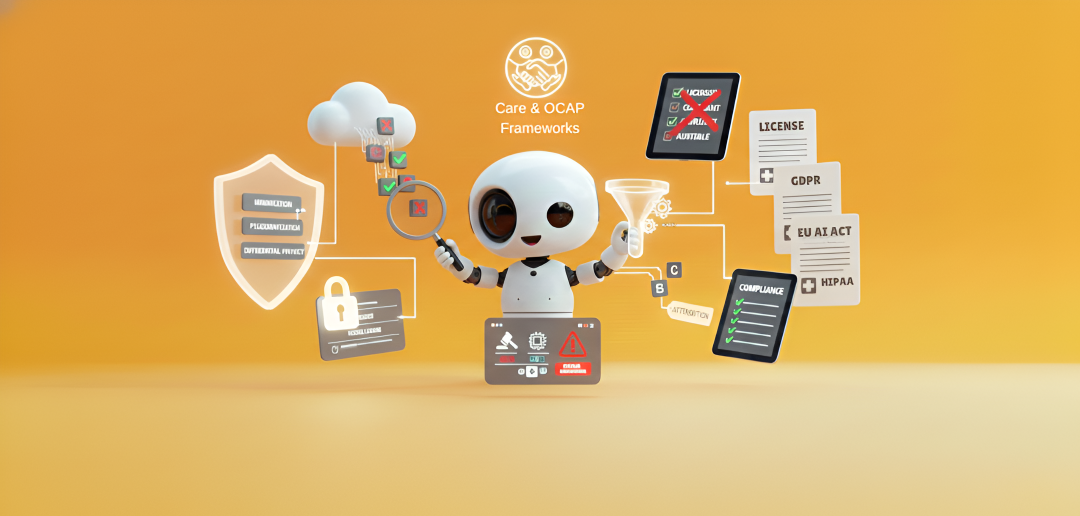
⮞ Indigenous Data Protocol Compliance - Obtain consent; follow community-approved usage frameworks like CARE, OCAP.
6. Real-World Incidents
Incident 1 — Getty Images vs. Stability AI (Copyright Lawsuit)
Getty Images sued Stability AI for allegedly training Stable Diffusion on millions of copyrighted Getty images without permission, with outputs sometimes containing distorted Getty watermarks.
Incident 2 — OpenAI’s GDPR Compliance Investigation (EU Data Leak Concerns)
The Italian Data Protection Authority temporarily banned ChatGPT in 2023 over GDPR violations, citing unlawful data collection and lack of age-verification and transparency. The case triggered broader EU-wide scrutiny and regulatory pressure.
7. Guardrails
⮞ Copyright detection, attribution systems → Prevent models from generating or memorizing copyrighted material.
⮞ Trademark filtering, brand protection → Block outputs containing protected logos or brand identifiers.
⮞ Data protection impact assessments → Identify privacy risks before deployment.
⮞ Risk assessment, conformity assessment → Ensure compliance with AI Act and regulatory expectations.
⮞ Industry-specific safety measures → Enforce sector rules like HIPAA, PCI-DSS, FINRA, etc.
⮞ Indigenous consent protocols → Respect ownership, sovereignty, and consent for Indigenous data.
8. Final Thoughts
Legal & compliance attacks will escalate as AI adoption grows. Companies deploying AI must proactively align with copyright law, GDPR, AI governance frameworks, and community-specific protocols—not wait for lawsuits or regulatory action. Strong documentation, compliance-aware training practices, and structured guardrails ensure the AI behaves responsibly and avoids high-risk legal exposure.
Heading about sub attacks
.png)

.svg)

.png)
.png)
.png)
.png)
.png)
.png)
.png)
.png)
.png)
.png)

Sources
Getty Images vs. Stability AI - https://www.judiciary.uk/wp-content/uploads/2025/11/Getty-Images-v-Stability-AI.pdf
OpenAI’s GDPR Compliance Investigation (EU Data Leak Concerns) - https://techcrunch.com/2023/03/31/chatgpt-blocked-italy/

.png)
.jpg)
.png)
.png)

.png)
%20(1).png)
.jpg)
.png)
.jpg)


