.svg)
Operational Safety & Governance issues
1. Understanding the Attack
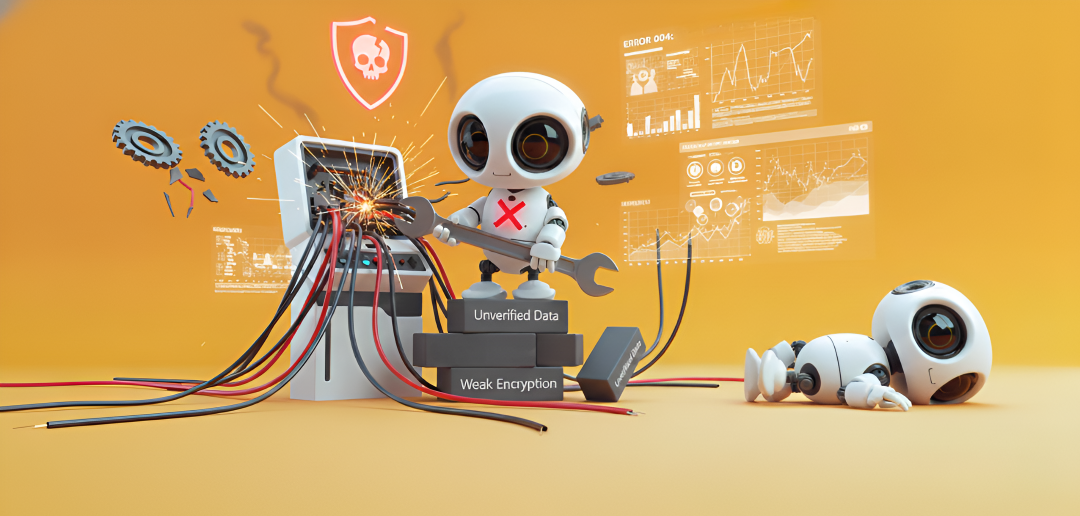
Operational Safety & Governance Issues arise when AI systems are built or deployed without strong oversight, structured safety processes, or continuous monitoring. These gaps allow unsafe behaviors to slip through development, evade testing, and reach real users—creating systemic risks that compound over time.
2. Why This Vulnerability Occurs
⮞ Lack of Safety-by-Design Culture
Teams rush to release features without embedding structured safety reviews into early development.
⮞ Irregular or Superficial Red Teaming
Models are tested inconsistently or only with internal teams, leaving blind spots in adversarial behavior.
⮞ Undefined Safety Thresholds
No clear numerical or qualitative boundaries exist to judge risky outputs or harmful behavior.
⮞ Missing Incident Response Protocols
Organizations lack predefined escalation paths for identifying, containing, and resolving AI failures.
⮞ Weak Continuous Monitoring
After deployment, systems aren’t observed for model drift, misuse patterns, or emerging threats.
3. Examples
Example 1
An AI assistant pushed to production without a final safety review began generating harmful health advice, revealing the absence of safety-by-design checks.
Example 2
A deployed model continued producing unsafe jailbreak responses for weeks because monitoring alerts were disabled, and no team noticed behavior drift.
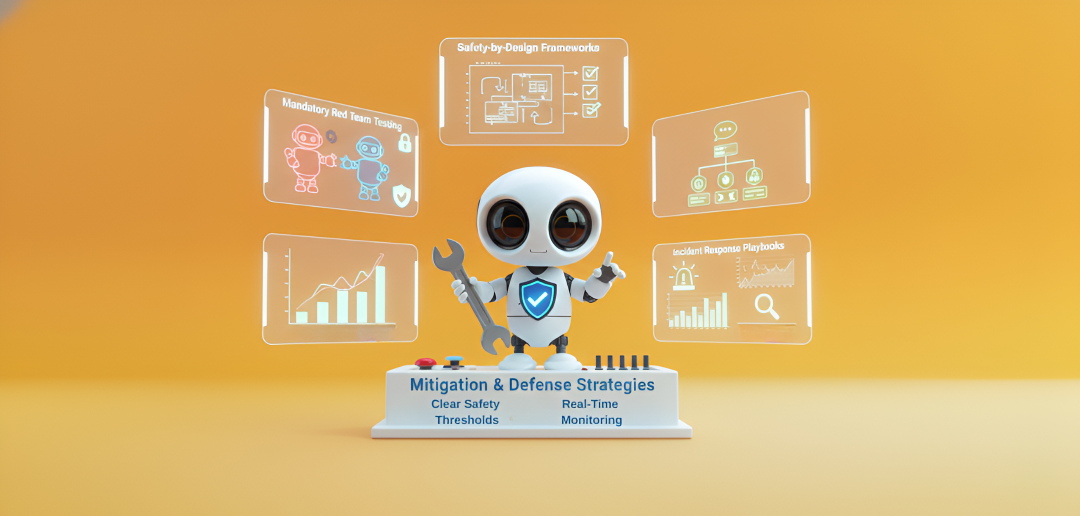
4. Mitigation & Defense Strategies
⮞ Safety-by-Design Frameworks
Embed structured safety reviews, risk analysis, and testing requirements from day zero.
⮞ Mandatory Red Team Testing
Conduct recurring adversarial tests with both internal and external evaluators.
⮞ Clear Safety Thresholds
Define measurable limits for toxic, harmful, or high-risk outputs across model versions.
⮞ Incident Response Playbooks
Create standardized steps for detection, containment, communication, and remediation.
⮞ Real-Time Monitoring
Use automated tools to detect anomalies, identify misuse, and track unexpected model drift.
5. Real-World Incidents
Incident 1 — Microsoft Copilot+ “Recall” Backlash (2024)
Screenshots of nearly all user activity were logged locally, revealing poor safety-by-design oversight and forcing Microsoft to halt rollout and redesign core features.
Incident 2 — Meta Llama-3 Red Teaming Leak (2024)
Leaked internal documents showed the model was easily jailbroken, exposing gaps in governance, safety evaluation, and incomplete red-team protocols.
6. Guardrails
⮞ Safety requirements, design reviews: Build safety into development from the start.
⮞ Red team protocols, external evaluation: Test systems adversarially using internal and third-party experts.
⮞ Threshold setting, monitoring systems: Define boundaries for harmful behavior and enforce them automatically.
⮞ Response plans, escalation procedures: Activate structured workflows when issues occur.
⮞Automated monitoring, alerting systems: Track model behavior continuously and trigger alerts on anomalies.
7. Final Thoughts
Operational Safety & Governance Issues remain one of the biggest reasons AI systems fail in real environments. Most of these failures are preventable—if organizations adopt safety-by-design, enforce rigorous red teaming, define clear thresholds, and maintain constant monitoring. Strong guardrails turn chaotic, unpredictable AI systems into reliable, well-governed tools that operate safely at scale.
Heading about sub attacks
.png)

.svg)

.png)
.png)
.png)
.png)
.png)
.png)
.png)
.png)
.png)
.png)

Sources
Microsoft Copilot+ “Recall” Backlash - https://doublepulsar.com/microsoft-recall-on-copilot-pc-testing-the-security-and-privacy-implications-ddb296093b6c
Meta Llama-3 Red Teaming Leak - https://promptfoo.dev/models/reports/llama-3.3-70b

.png)
.jpg)
.png)
.png)

.png)
.jpg)
.png)
.jpg)
.png)


